
Among the countless marine creatures that inhabit tropical coral reefs, few are as striking and fascinating as the Harlequin Shrimp (Hymenocera picta). With its vibrant blue, purple, cream, and pink patterns, this small crustacean looks more like a piece of underwater art than a predator. Yet behind its delicate appearance lies one of the most specialized hunters in the ocean.
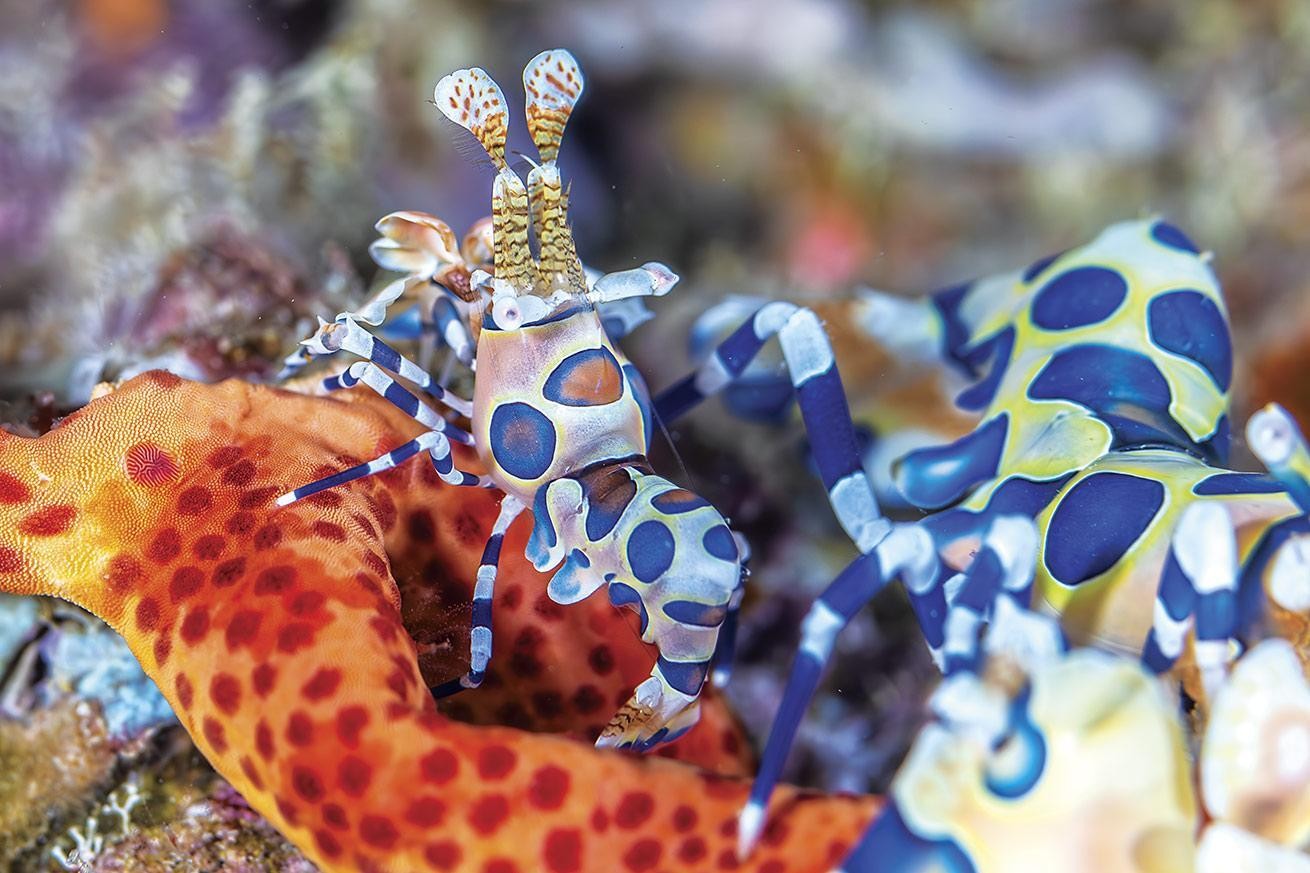
The Harlequin Shrimp is instantly recognizable thanks to its unique coloration and flattened paddle-like claws. Most individuals grow to only 2–5 cm (1–2 inches) in length, making them a prized discovery for divers and underwater photographers.
Their spectacular color patterns vary slightly depending on location, but they are typically decorated with blue, purple, pink, and cream markings that help them blend among corals and reef structures.
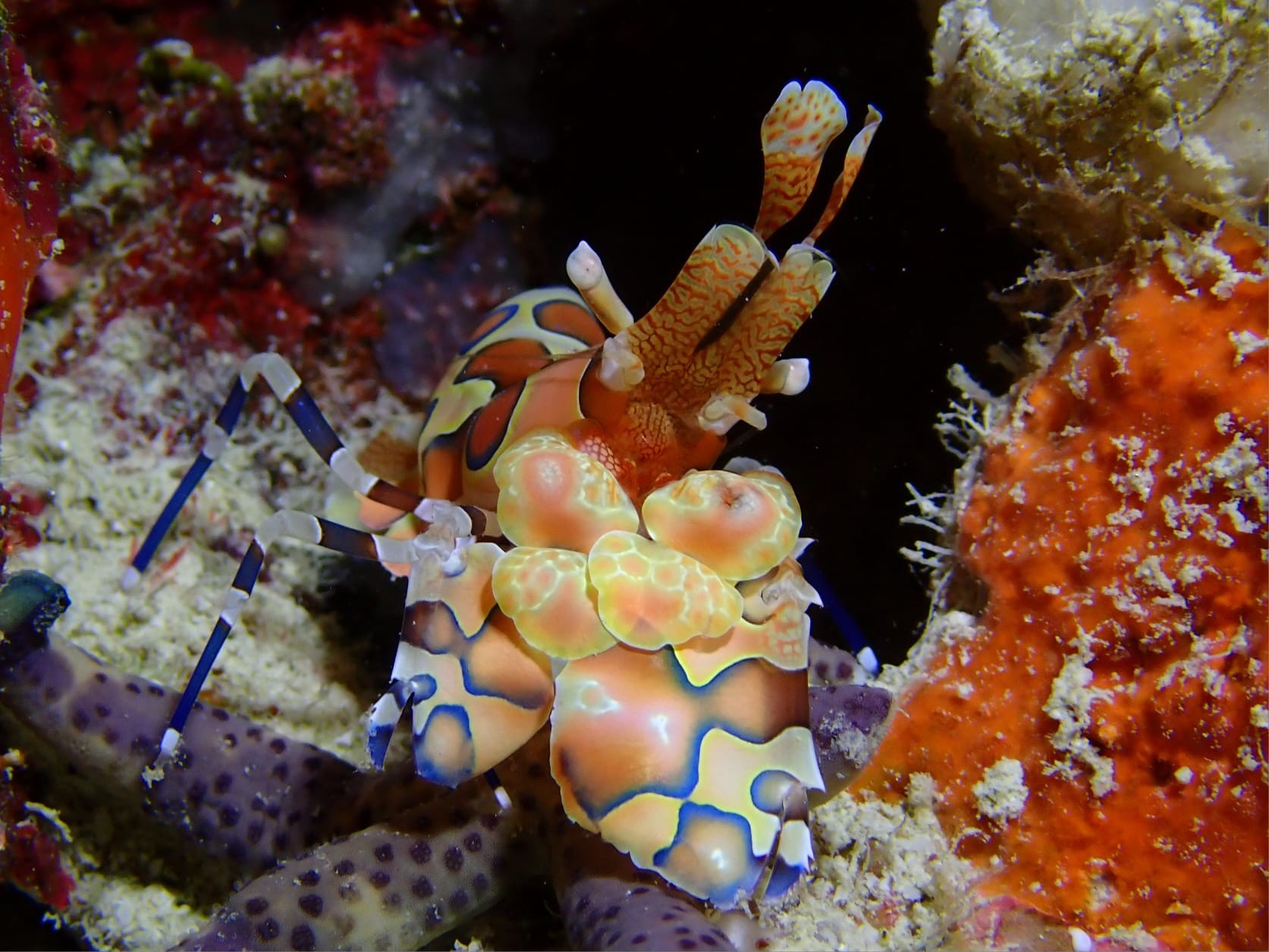
Harlequin Shrimp are found throughout the tropical Indo-Pacific region. Their habitat includes the Maldives, Red Sea, Indonesia, Philippines, Australia, and many Pacific islands. Specifically, they typically inhabit coral reefs, rocky outcrops, lagoons, and reef slopes. These areas range from shallow water down to approximately 30 meters. Furthermore, they spend much of their time hiding beneath coral ledges, in crevices, or under rubble. These hiding spots keep them protected from predators.
One of the most remarkable characteristics of Harlequin Shrimp is their tendency to live in monogamous pairs. In fact, once a male and female establish a partnership, they often remain together for long periods. They will regularly share both shelter and hunting grounds. Consequently, divers who find one shrimp will frequently discover its partner nearby.
The Harlequin Shrimp is famous for its extraordinary feeding behavior. Unlike most shrimp species, it feeds almost exclusively on starfish. For instance, its preferred prey includes various sea stars, such as cushion stars and blue sea stars.
Using their powerful claws, Harlequin Shrimp can carefully flip a starfish onto its back to immobilize it. Afterward, the shrimp consume the tube feet and soft tissues. They intentionally keep the starfish alive for as long as possible, thereby ensuring a fresh food supply over several days. Ultimately, this unusual feeding strategy is one of the most specialized diets found among marine crustaceans. Because of their dependence on starfish, the distribution of Harlequin Shrimp is therefore closely linked to the availability of suitable prey.
Harlequin Shrimp reproduce sexually. Females carry hundreds to thousands of tiny eggs beneath their abdomen. Following this, the larvae enter a planktonic stage. They drift in ocean currents for several weeks before settling onto the reef and transforming into juvenile shrimp. Similarly to other crustaceans, they grow by molting their exoskeleton. During this vulnerable period, they subsequently seek shelter until their new shell hardens.
Despite their bright coloration, Harlequin Shrimp face threats from larger reef predators. These threats include fish, octopuses, and crustaceans. However, their secretive behavior, camouflage, and preference for sheltered environments help increase their chances of survival.
For underwater photographers and macro enthusiasts, spotting a Harlequin Shrimp is always a special moment. Indeed, their vibrant colors, unique behavior, and cooperative nature make them a highly sought-after macro subject. Therefore, finding one requires patience and a keen eye. However, the reward is an encounter with one of the ocean’s most beautiful invertebrates.
In addition, these shrimp are a favorite among Divepoint guests because they can be found around all Divepoint Maldives centers. Unlike many marine creatures, Harlequin Shrimp do not require deep dives to observe. They are often found in shallow reef environments, thus making them accessible even to beginners and newly certified divers. In fact, many guests encounter their very first Harlequin Shrimp during introductory dives or while exploring the house reefs. This proves that some of the ocean’s most extraordinary creatures can be discovered without venturing far from the surface.
Although small in size, the Harlequin Shrimp plays a remarkable role in reef ecosystems. In conclusion, its specialized feeding habits, lifelong partnerships, and extraordinary appearance make it a truly unique creature. So, the next time you explore a coral reef, take a closer look among the crevices and coral heads. You may just discover one of the ocean’s most elegant predators quietly going about its extraordinary life.


