
Each month, we love sharing a closer look at the incredible marine life that makes the Maldives so unique. This time, we turn our attention to one of the ocean’s most intelligent and fascinating creatures: the pilot whale.
Despite their name, pilot whales are not actually whales, but large members of the dolphin family. Known for their strong social bonds, they live in tight-knit groups—often called pods—that can include dozens of individuals traveling, hunting, and communicating together.
Pilot whales are highly intelligent and curious animals. They are often seen approaching boats or divers, sometimes swimming gracefully alongside for short moments. Their communication is complex, using a variety of clicks, whistles, and body language to stay connected within the pod.
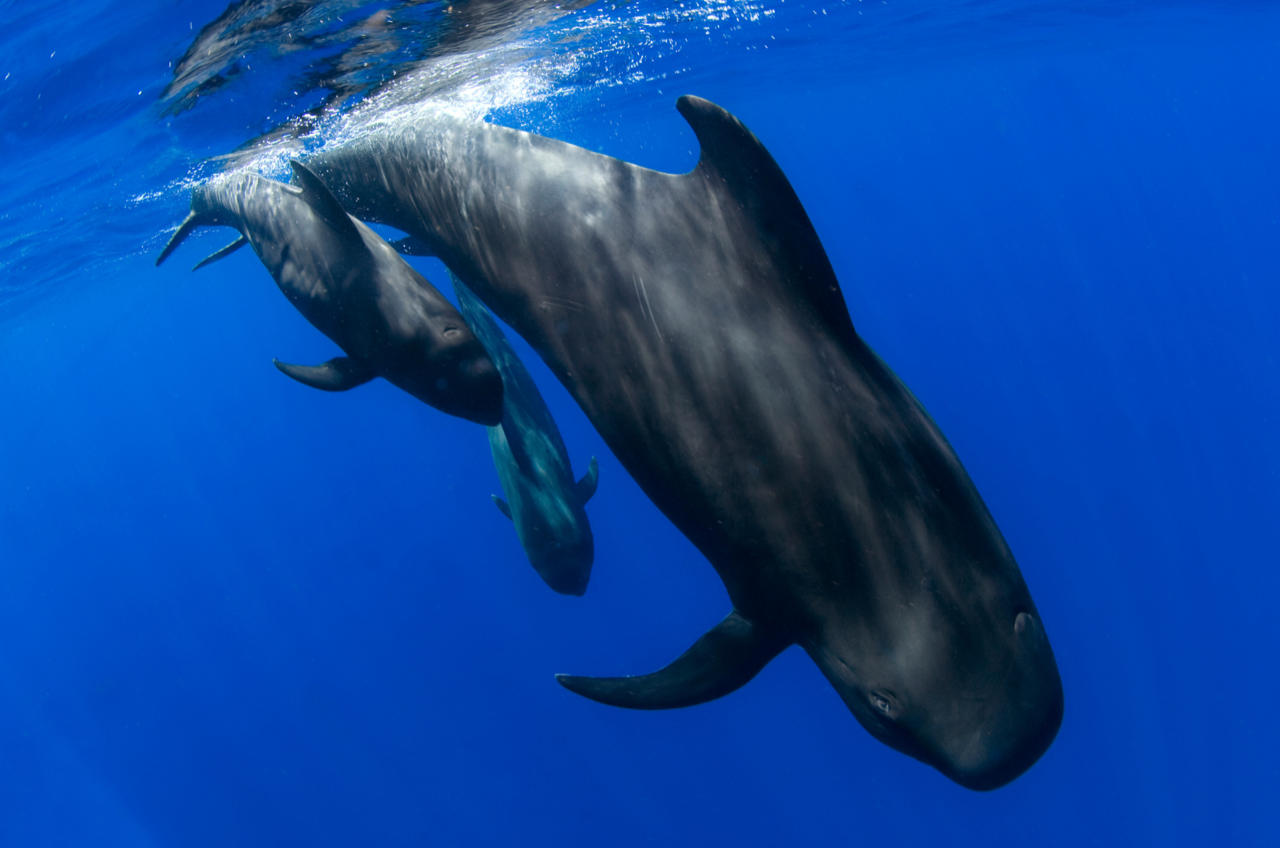
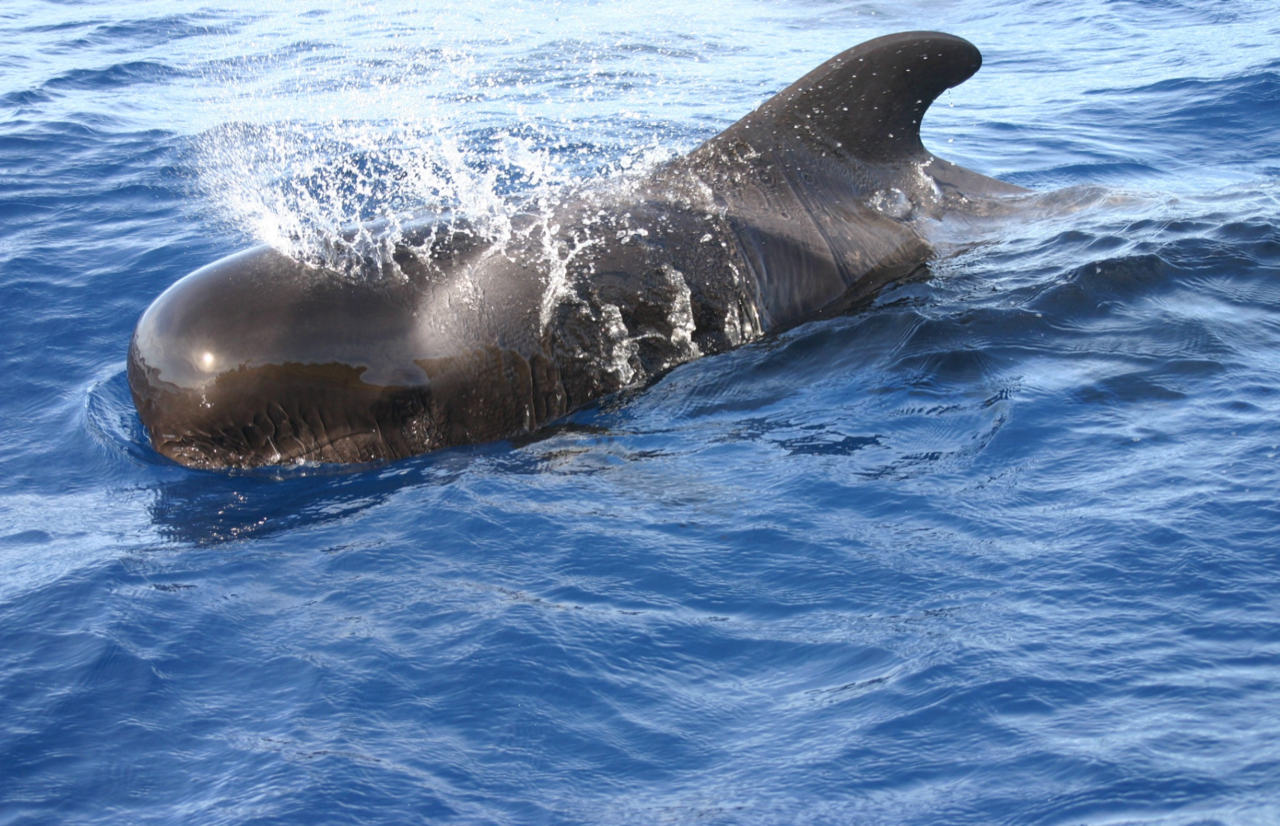
These animals prefer deeper offshore waters, where they feed mainly on squid and fish. Their ability to dive to significant depths makes them skilled hunters, perfectly adapted to life in the open ocean.
One of the most remarkable aspects of pilot whales is their social structure. Pods are usually matriarchal, meaning they are led by older females, and individuals often remain with their family group for life. This strong bond is also the reason why they are known for their deep loyalty to one another.
Pilot whales have a relatively slow reproductive cycle. Females give birth to a single calf after a gestation period of around 12 to 16 months. Calves stay close to their mothers for several years, learning essential survival and social skills within the pod.
In the Maldives, pilot whales can occasionally be spotted in deeper channels and open waters. During this time of the year, there is a chance to encounter them around Hudhuranfushi, where our team at Divepoint Maldives operates. These encounters are always special—unpredictable, respectful, and truly unforgettable.


