
Also known as the Humphead Wrasse, the Napoleon Wrasse is one of the most iconic and fascinating fish found on Maldives coral reefs. Divers across all our Divepoint operations are lucky to encounter this remarkable species regularly, making it a true highlight of many dives around Meedhupparu and beyond.
The Napoleon Wrasse is instantly recognizable thanks to its massive size, thick lips, and the characteristic hump on its forehead, which becomes more pronounced with age — especially in males. Its coloration varies from greenish-blue to turquoise, often marked with intricate patterns and lines across the face. Adults can grow over 2 meters in length and weigh more than 180 kg, making them one of the largest reef fish in the world.
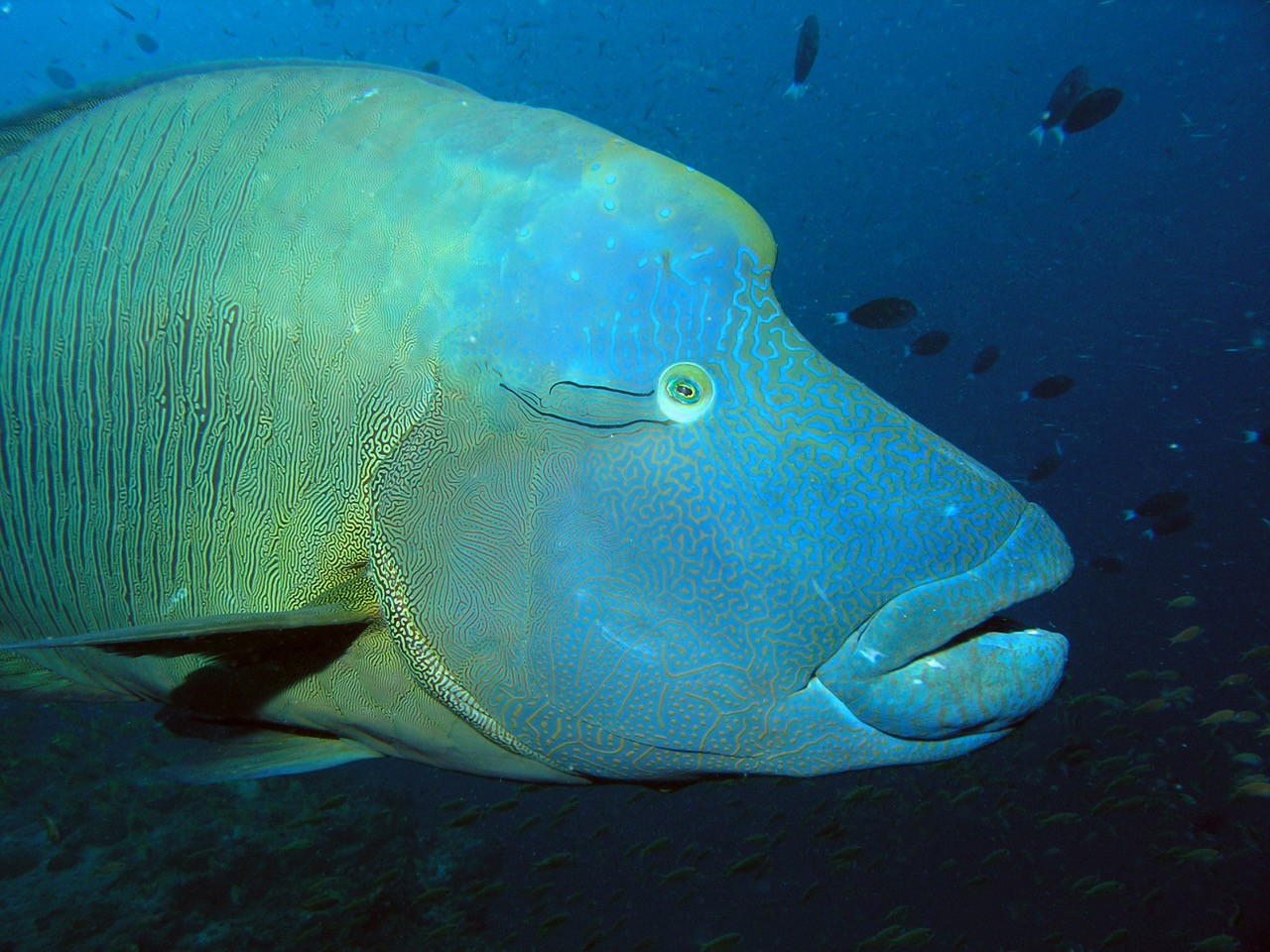
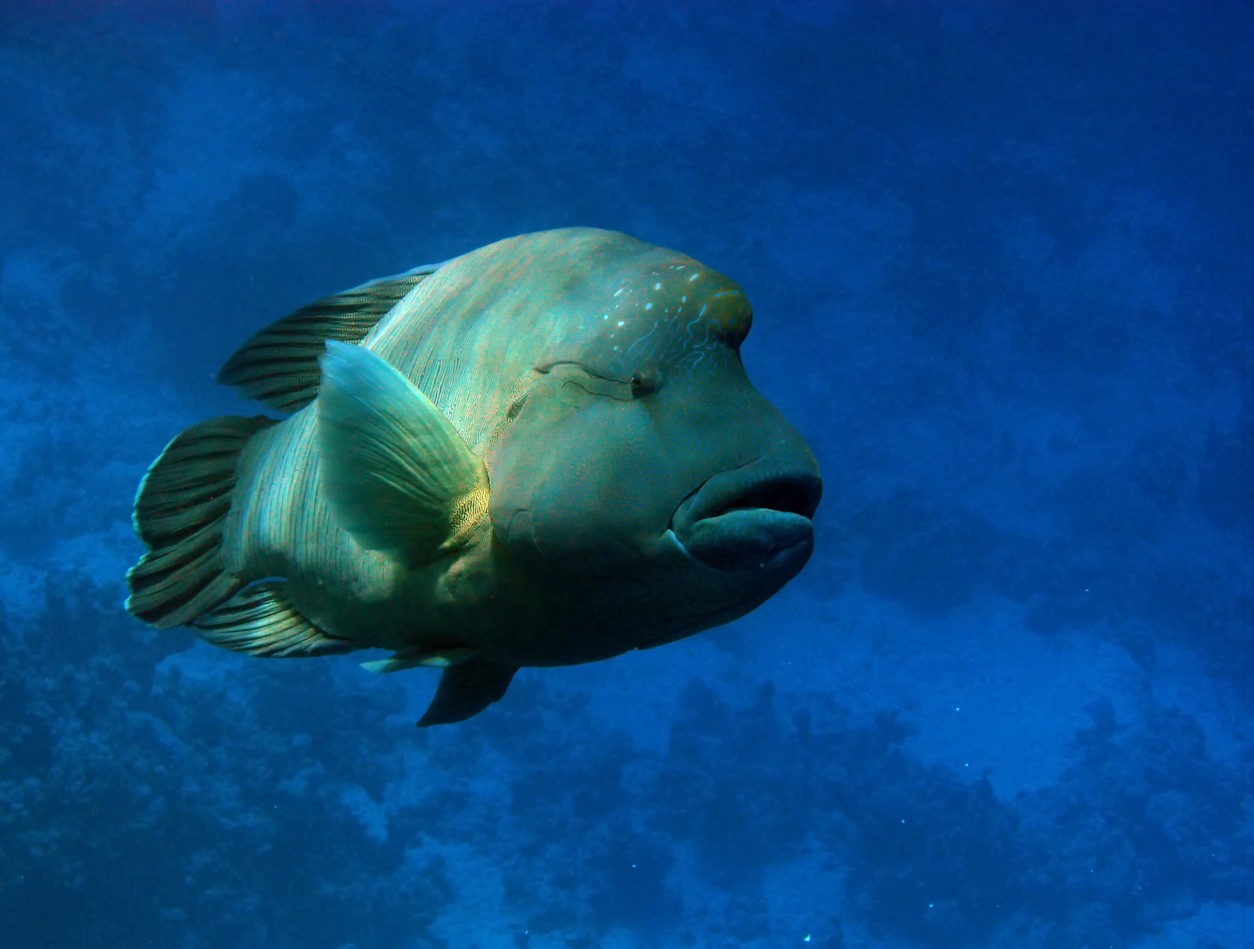
Despite its impressive size, the Napoleon Wrasse is known for its calm, peaceful, and intelligent behavior. It typically swims slowly along reef slopes, drop-offs, and channels, often alone or in pairs. Divers frequently notice its curiosity: many individuals approach calmly, observe divers closely, and sometimes follow groups for several minutes. This inquisitive nature makes encounters especially memorable.
Napoleon Wrasses are diurnal, meaning they are active during the day and rest at night. At night, they seek shelter within reef crevices or sandy areas near the reef, where they are protected from predators.
The Napoleon Wrasse plays a vital role in maintaining reef health. Its diet consists of hard-shelled prey such as mollusks, crustaceans, sea urchins, and notably crown-of-thorns starfish — a species that can cause significant coral damage when populations explode. Thanks to their powerful jaws and specialized teeth, Napoleon Wrasses are able to crush prey that many other reef fish cannot eat.
By controlling populations of coral predators, they help maintain the balance of the reef ecosystem, making them an important keystone species in tropical coral environments.
One of the most fascinating aspects of the Napoleon Wrasse is its reproductive strategy. This species is protogynous hermaphroditic, meaning individuals are born female and can later change into males as they mature. This transformation usually occurs when a dominant male is absent, ensuring the stability of the population.
Spawning typically takes place in specific aggregation sites, often linked to lunar cycles. During these events, large individuals gather to reproduce, releasing eggs and sperm into the open water. Because they grow slowly and reach sexual maturity relatively late, Napoleon Wrasses are particularly vulnerable to overfishing.
Sadly, the Napoleon Wrasse is currently listed as Endangered by the IUCN. Threats include overfishing, illegal trade, and habitat degradation. Their slow growth rate and late maturity make population recovery difficult once numbers decline.
For divers, encountering a Napoleon Wrasse is therefore not only a magical experience but also a powerful reminder of the importance of marine conservation, responsible diving, and reef protection.
In the Maldives, Napoleon Wrasses are commonly found along healthy reefs, channels, and drop-offs — exactly the environments we explore during our dives. With calm conditions and respectful diving practices, divers often enjoy long, close encounters with these gentle giants.
If you’re diving with us, keep your eyes open and your movements slow — you never know when a Napoleon Wrasse might glide past and turn your dive into an unforgettable memory.


