
Meet the hawksbill turtle — one of the most charismatic residents you might bump into while diving around Rannalhi. And yes, that funny little face is where the name comes from. Its narrow, pointed beak looks a bit like a hawk’s — and it isn’t just for decoration. That beak is the perfect tool for reaching into tiny cracks and crevices in the reef.
And what is it looking for? Sponges. Lots of sponges.
Hawksbills are particularly famous for eating sponges, but their menu can also include algae, corals, sea anemones, jellyfish, molluscs, tunicates, crustaceans and other marine invertebrates. Their sharp beak allows them to pick food out of places that other reef creatures simply can’t reach.
So while we divers are busy admiring the reef, our hawksbill friend is basically doing a little underwater gardening.
By feeding on sponges, hawksbills help prevent certain sponge species from taking over parts of the reef, leaving space for other organisms and contributing to a healthy, diverse coral reef ecosystem. Small turtle, important job.
Their beautiful shell is another giveaway. Hawksbills have overlapping scales, called scutes, which create the distinctive pattern and serrated-looking edge around their carapace.
They are found throughout tropical and subtropical oceans, including the Indian Ocean, and are strongly associated with coral reef habitats. Young turtles spend part of their early lives in open-ocean environments before moving towards coastal feeding grounds as they grow.
And don’t be fooled by that relaxed swimming style.
Hawksbills are travellers.
They can migrate hundreds or even thousands of kilometres between feeding grounds and nesting areas. One female tracked in the Atlantic travelled around 1,860 km from her nesting area to her feeding grounds. In the Solomon Islands, hawksbills have been recorded travelling roughly 800–1,650 km between nesting and feeding areas.
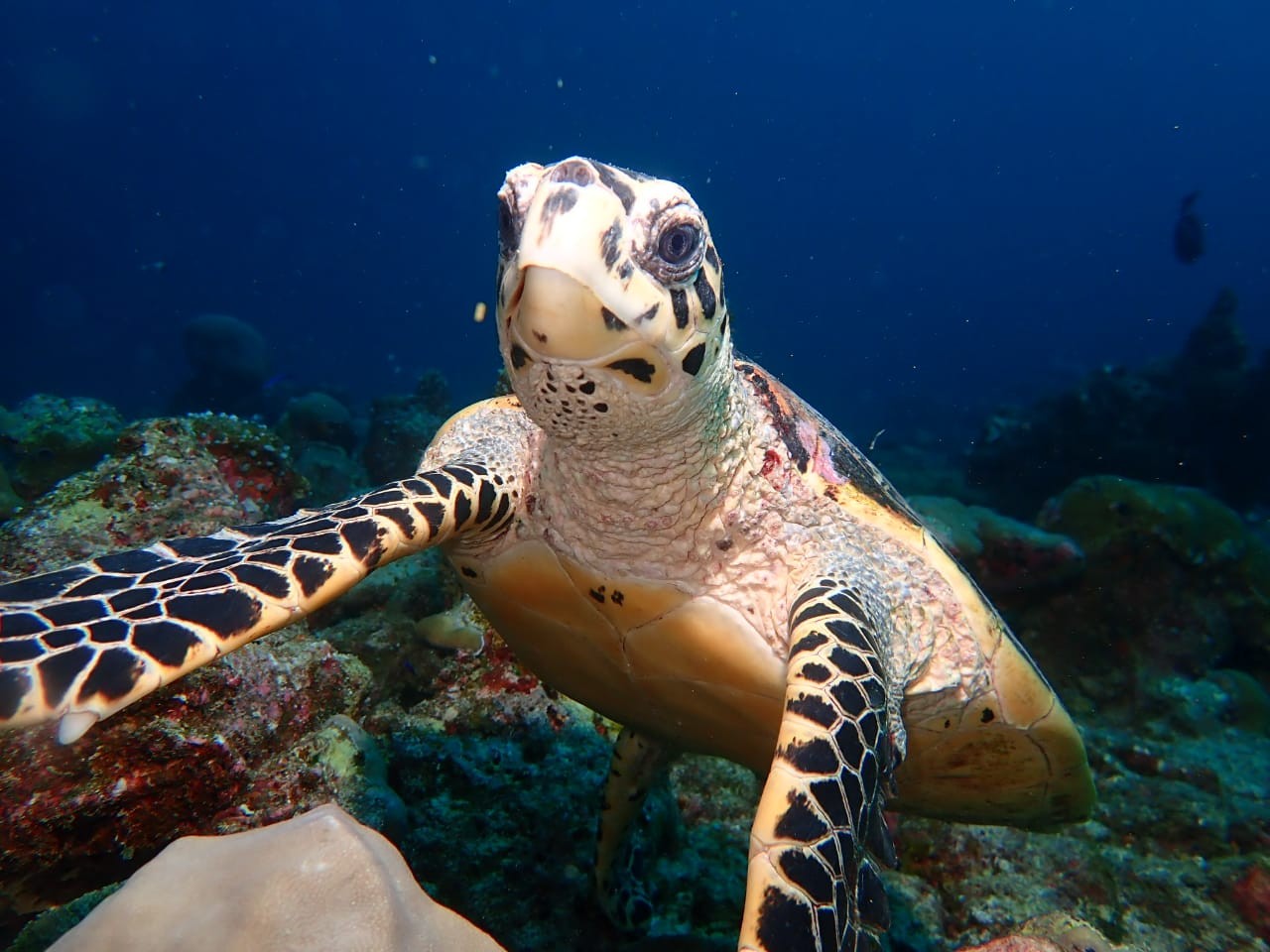
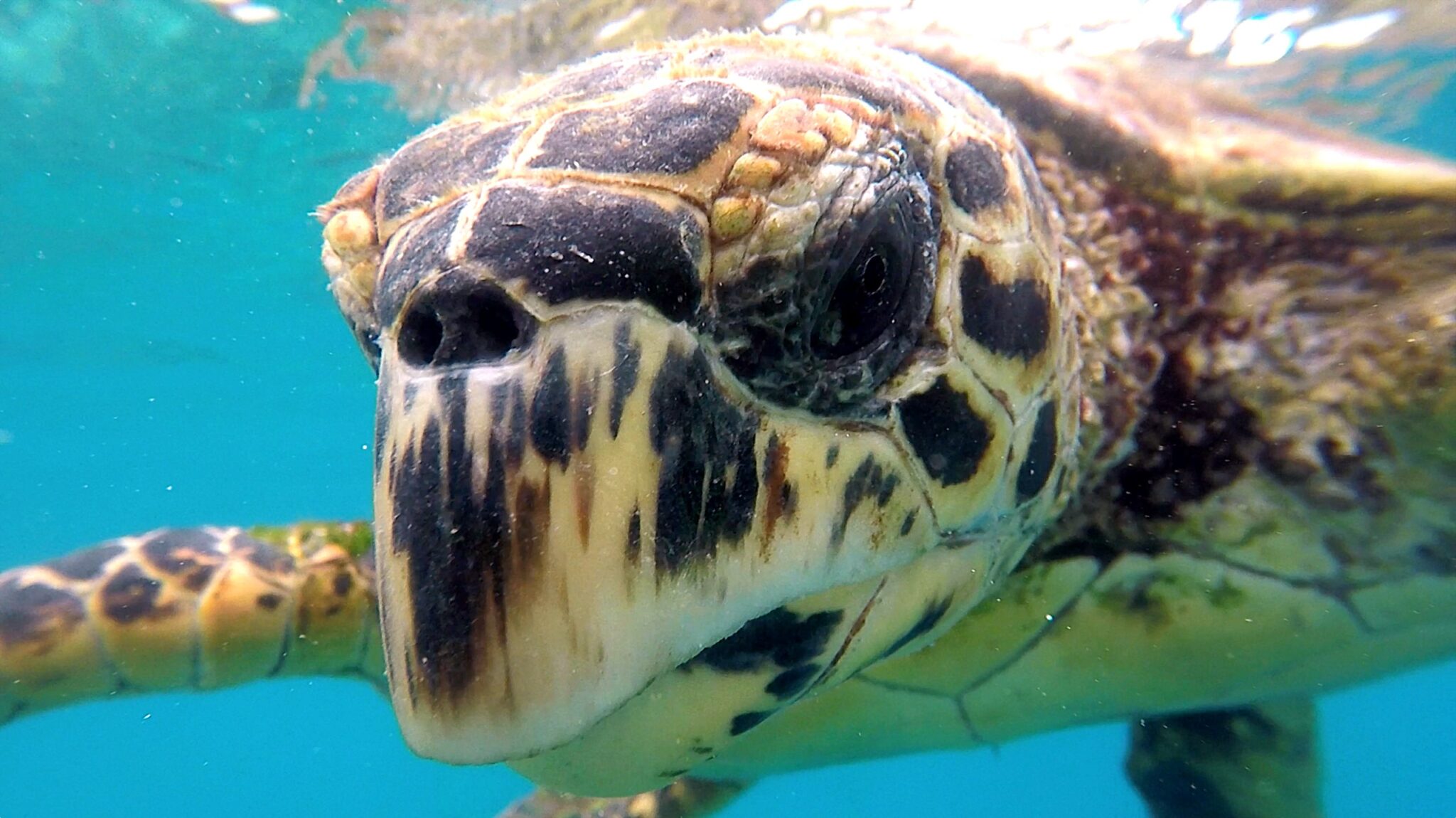
One of the most fascinating things about hawksbills is their connection to their birthplace.
Female hawksbills generally return to the same general region where they hatched to lay their own eggs — sometimes decades after they first entered the ocean. They may travel enormous distances to get there.
And they don’t do it just once.
Females typically nest every 1–5 years, laying several nests during a nesting season. Each nest can contain around 130–160 eggs, buried safely in the sand. After roughly two months of incubation, the tiny hatchlings emerge and make their way towards the sea.
Imagine that journey:
Born on a beach. Into the ocean. Thousands of kilometres away. Years — sometimes decades — spent growing and travelling. And eventually…back home.
Even more fascinating: the temperature of the nest helps determine whether hatchlings develop as males or females. Warmer sand generally produces more females, while cooler temperatures produce more males.
There is also a much more serious side to this beautiful turtle.
The hawksbill is Critically Endangered, and its populations have been heavily affected by historical hunting for its beautiful shell, which was used to make “tortoiseshell” jewellery and other products. International trade in tortoiseshell is prohibited, but illegal exploitation remains a threat.
Hawksbills also face threats from fishing gear, habitat loss, pollution, marine debris, climate change and boat strikes.
Which makes every encounter underwater a little more special. And this is exactly why we want to get to know our Rannalhi turtles better. Through our turtle monitoring programme, we identify individual hawksbills by the unique markings and patterns on their carapace. Once identified, they get something very special…
A name! We record their sightings and follow their movements and behaviour, slowly learning more about their favourite places, habits and personalities.
So next time you see a hawksbill cruising past Rannalhi, give it some space, keep your hands to yourself, and enjoy the moment.
You’re not just looking at a turtle. You might be meeting one of our regulars. And if it gives you that slightly grumpy-looking face? Don’t worry.
That’s just the hawksbill saying hello.


